Business Weblog
Dr. Elly Katabira, head of the International AIDS Society (IAS), says despite recent successes against the epidemic, much remains to be done.
Wednesday is World AIDS Day. The theme is “Universal Access and Human Rights.” It’s estimated there are 33 million people living with HIV around the world - most in sub-Saharan Africa.
Katabira took over the reins of the IAS in July and became its first African president. He had been professor of medicine at Makerere University in Kampala, Uganda.
Don’t take success for granted
On World AIDS Day, he says, “I think the message I would like everybody to have…is that, yes, the United Nations AIDS (UNAIDS) has announced some successes in reduction in numbers, but we are far, far from where we need to be comfortable.”
He says much more needs to be done, including promoting prevention, care and universal access to antiretroviral treatment” in areas where “the epidemic is still rampant.”
Katabira says it’s important “to keep other people aware of what is going on, so that they can play their part until we can get over this epidemic,” he says.
“Particularly, I’m concerned that some people are beginning to take it light(ly). For example, thinking that since drugs are available, therefore the disease is treatable. This shouldn’t be the case. And also I know, particularly in countries where the epidemic is a major issue, the contribution for funding for access to care is not as what we would want it to be,” he says.
Tight economic times
Since the global economic crisis, many say donor funding has “flat-lined.”
“Still,” Katabira says, “the problem is a big one. The need for more funding for HIV care is still crucial. For example, if I look at the big countries like the G8 and the G20…it is in their own interest, as well as in our interest, the beneficiaries, that more funds are put on the table to ensure that we can deliver (on) the promises we’ve made over the years.”
However, he says it’s not just the donors who should do more, despite the economic slowdown. The beneficiary countries also must to more.
“We, ourselves, need to invest more in the care of our people. I strongly believe that if we do so, it will also encourage the others to give us more, particularly at this crucial moment when finances are tight,” he says.
As a result of the poor economy, other priorities, he says, may replace HIV/AIDS.
“Global warming has come up and people think it is more relevant. Other people believe that AIDS has received already enough money and therefore they don’t need any more. We need to change that and keep reminding them that, yes, the battle is not yet over,” he says.
Many still need treatment.
The recent UNAIDS report says more than five-million people are now receiving antiretroviral treatment in developing countries. “But don’t forget,” Katabira says, “ten million still need the treatment. So we are far away from what is ideal.”
He warns if treatment is not expanded, “then we are going back to square one where we started off with fewer people on treatment and more deaths, which nobody wants to happen again.”
Hopes for 2011
“I hope first of all for 2011that there will be more commitment for accelerated access to HIV care,” he says, “And secondly, of course, changes in the legislation across the countries where it is still illegal to address issues like homosexuality and drug use. So that it opens the way for these people to (be given)…equal access to interventions, which are available to others today.”
2012
The International AIDS Conference, the world’s largest, will be held in Washington, D.C. in mid 2012. It’s been many years since the U.S. hosted the event. Katabira and the IAS will play a major role in organizing the conference. He expects the 19th International AIDS conference to be different from previous meetings.
“To start with, when we got Washington, D.C. in 2012, we would have had 22 years without being in the U.S. as a result of course of the restrictions on people traveling to the U.S. who are HIV infected, which was lifted,” he says.
The travel ban was officially lifted in January 2010. The process to remove the ban had started in 2008 under the Bush administration and finalized by President Obama. It had been imposed in 1987, in the early years of the epidemic, amid misunderstanding about the disease.
“More importantly,” he says, “(the) U.S. has made a lot of contributions, not only through the current PEPFAR (President’s Emergency Plan for AIDS Relief), but also in the support of training and research across the world. It should be an opportunity for them to show what they have done for the rest of the world.”
He adds, “This time it’s going to be in their own backyard. So there should be an opportunity to…demonstrate these collaborations and benefits, which have come out as a result.”
AN advent calendar highlighting domestic abuse in Scotland will be unveiled today as part of a Christmas anti-violence campaign.
Domestic abuse intensifies over Christmas and the online calendar highlights the scale of the problem.
The project has been developed by Scotland's Violence Reduction Unit and every day until December 25, the calendar will reveal a shocking statistic or fact relating to the horrors of domestic abuse in Scotland.
Chief Inspector Graham Goulden, who is leading the campaign, said: "Sadly, Christmas and New Year are peak periods for domestic abuse.
"We wanted to highlight this and raise awareness of the fact that, for many victims, domestic abuse isn't just a one-off event, it's something that happens day in, day out.
"We know there will be people out there for whom Christmas will not be a happy time. Often it will not just be the victim that suffers - children living in households where there is domestic abuse are at risk too.
"This kind of behaviour devastates families, and will not be tolerated in 21st-century Scotland." Police no longer need a statement to make an arrest but can act on the basis of any evidence of violence or threatening behaviour.
Forces across Scotland will take part in the clampdown, which runs from December 2010 - January 2011.
Past campaigns have been a huge success. Last year, Strathclyde Police said incidents fell by 42 per cent.
NEW YORK – Drew Brees was honored as Sports Illustrated's sportsman of the year for his championship on the field and his charity off it.
Brees became the award's 57th recipient when the magazine made the announcement Tuesday on the "Today" show. The quarterback led the long-suffering New Orleans Saints to their first Super Bowl title in February, lifting the spirits of the hurricane-battered city.
But the cover story notes he's done much more than inspire with his brilliant play. Since Brees joined the Saints in 2006 months after Hurricane Katrina, his foundation has worked with nearly 50 New Orleans schools and organizations to aid in recovery.
"The more that I've learned about the award and that it goes well beyond what you accomplish on the field, that it's very much about what you do off the field as well, with community service and your family, makes the award even more special to me," Brees said.
Brees is the fifth NFL quarterback to be honored and third in six years. The Pittsburgh Steelers' Terry Bradshaw won in 1979, the San Francisco 49ers' Joe Montana in 1990, the New England Patriots' Tom Brady in 2005 and the Green Bay Packers' Brett Favre in 2007.
Sports Illustrated Group editor Terry McDonell said he had been "determined not to be a slave to a calendar" in considering NFL players, even though it might seem like an eternity between the Super Bowl and the announcement of the award. But Brees' contributions outside of football made this selection easy.
"It's year-round for him," McDonell said.
Brees will be recognized at a ceremony in New York on Tuesday with past winners including Bill Russell, Curt Schilling and Montana.
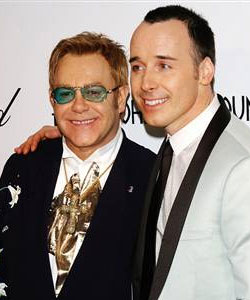
Sir Elton John is to guest-edit the Independent and spin-off i tomorrow for World AIDS Day.
He has reportedly asked Bill Clinton, Elizabeth Taylor and Kanye West to contribute to the edition.
All circulation revenue will go to the Elton John AIDS Foundation.
According to the Guardian, Taylor is writing a piece for the issue and there will be contributions from broadcaster Christiane Amanpour and Jimmy Choo co-founder Tamara Mellon.
Clinton will write a comment piece on how the European Union needs to change and other articles will be on John’s heroes, including gay rights campaigner Peter Tatchell, footballer Paul Scholes and US secretary of state Hillary Clinton.
John said he intended to “enlist the help of prominent friends” for the special issue.
“I was thrilled to be invited to guest edit The Independent,” he added. “I’m really looking forward to spending a day in the editor’s chair, and I’m pleased to get the chance to put the subject of AIDS at the top of the editorial agenda.”
PORTLAND, Ore. – A Somali-born teenager plotted "a spectacular show" of terrorism for months, saying he didn't mind that children would die if he bombed a crowded Christmas tree-lighting ceremony, according to a law-enforcement official and court documents.
He never got the chance. Mohamed Osman Mohamud, 19, was arrested Friday in downtown Portland after using a cell phone to try to detonate what he thought were explosives in a van, prosecutors said. It turned out to be a dummy bomb put together by FBI agents.
It is the latest in a string of alleged terrorist plots by U.S. citizens or residents, including a Times Square plot in which a Pakistan-born man pleaded guilty earlier this year to trying to set off a car bomb at a bustling street corner. Last month, another Pakistan-born Virginia resident was accused in a bomb plot to kill commuters.
In the Portland plot, Mohamud believed he was receiving help from a larger ring of jihadists as he communicated with undercover federal agents, but no foreign terrorist organization was directing him, according to a law-enforcement official who wasn't authorized to discuss the case publicly and spoke on a condition of anonymity.
The official said Mohamud was very committed to the plot and planned the details alone, including where to park the van to hurt the most people.
"I want whoever is attending that event to leave, to leave dead or injured." Mohamud said, according to the affidavit.
"It's in Oregon, and Oregon, like you know, nobody ever thinks about it," the suspect told an agent in one discussion.
Thousands of people had gathered Friday on a cold, clear night for the annual event at Pioneer Courthouse Square, a plaza often referred to as "Portland's living room" because of its popularity.
Just 10 minutes before Mohamud's 5:40 p.m. arrest, the lighting ceremony began. Babies sat on shoulders, and children cheered at the first appearance of Santa Claus onstage.
The tree-lighting on the bricks of the plaza went off without a hitch just as the arrest was taking place.
Mohamud, who grew up in Beaverton, was a former student at Oregon State University. He had been enrolled in courses from late 2009 until Oct. 6 before withdrawing, said Oregon State University spokesman Todd Simmons.
The law-enforcement official who spoke to the AP on Saturday said agents began investigating Mohamud after receiving a tip from someone who was concerned about the teenager. The official declined to provide any more detail about the relationship between Mohamud and that source.
In an e-mail exchange with an undercover agent Mohamud complained, "I have been betrayed by my family," although he describes no specific action that family members took.
The FBI monitored Mohamud's e-mail and found that he was in contact with people overseas, asking how he could travel to Pakistan and join the fight for jihad, according to an FBI affidavit.
According to the law enforcement official, Mohamud e-mailed a friend living in Pakistan who had been a student in Oregon in 2007-2008 and been in Yemen as well.
For reasons that have not been explained, Mohamud tried to board a flight to Kodiak, Alaska, from Portland on June 14, wasn't allowed to board and was interviewed by the FBI, the affidavit states.
Mohamud told the FBI he wanted to earn money fishing and then travel to join "the brothers." He said he had previously hoped to travel to Yemen but had never obtained a ticket or a visa.
On June 23, an undercover agent contacted Mohamud by e-mail, pretending to be affiliated with the "unindicted associate" Mohamud had sent e-mails to.
The FBI's affidavit says the friend in Pakistan referred him to another associate, but gave him an e-mail address that Mohamud tried repeatedly to use unsuccessfully. The official said FBI agents saw that as an opportunity and e-mailed Mohamud in response, claiming to be associates of his friend, the former student.
The affidavit said Mohamud was warned several times about the seriousness of his plan, that women and children could be killed, and that he could back out. But he told agents: "Since I was 15 I thought about all this" and "It's gonna be a fireworks show ... a spectacular show."
Mohamud, a naturalized U.S. citizen living in Corvallis, was charged with attempted use of a weapon of mass destruction, which carries a maximum sentence of life in prison. A court appearance was set for Monday.
Authorities allowed the plot to proceed in order to build up enough evidence to charge the suspect with attempt. Mohamud sent bomb components to undercover FBI agents who he believed were assembling the explosive device, but the agents supplied the fake bomb that Mohamud tried to detonate twice via his phone, authorities said.
The FBI affidavit says the undercover agent first met Mohamud in person on July 30 and asked what he would do for the cause of jihad. The agent suggested that Mohamud might want to spread Islam to others, continue his studies to help the cause overseas, raise money, and become a martyr or put together an explosion but didn't know how and needed training, the affidavit said.
The undercover agent said he could introduce him to an explosives expert and asked Mohamud to research potential targets.
At a second meeting on Aug. 19 at a Portland hotel, the agent brought a second undercover agent, the documents say, and Mohamud told them he had selected Portland's Pioneer Courthouse Square for the bombing.
On Nov. 4, the court documents say, Mohamud made a video in the presence of one of the undercover agents, putting on clothes he described as "Sheik Osama style:" a white robe, red and white headdress, and camouflage jacket.
He read a statement speaking of his dream of bringing "a dark day" on Americans and blaming his family for thwarting him, according to the court documents:
"To my parents who held me back from Jihad in the cause of Allah. I say to them ... if you — if you make allies with the enemy, then Allah's power ... will ask you about that on the day of judgment, and nothing that you do can hold me back ..."
Friday, an agent and Mohamud drove to downtown Portland in a white van that carried six 55-gallon drums with detonation cords and plastic caps, but all of them were inert, the complaint states.
They left the van near the downtown ceremony site and went to a train station where Mohamud was given a cell phone that he thought would blow up the vehicle, according to the complaint. There was no detonation when he dialed, and when he tried again federal agents and police made their move.
Tens of thousands of Somalis have resettled in the United States since their country plunged into lawlessness in 1991, and the U.S. has boosted aid to the country.
In August, the U.S. Justice Department unsealed an indictment naming 14 people accused of being a deadly pipeline routing money and fighters from the U.S. to al-Shabab, an al-Qaida affiliated group in Mohamud's native Somalia.
Officials have been working with Muslim community leaders across the United States, particularly in Somali diasporas in Minnesota, trying to combat the radicalization.
On Saturday, Omar Jamal, first secretary to the Somali mission to the United Nation and an advocate for Somalis in Minnesota, said Mohamud has a stepmother in Minneapolis. He condemned the plot and urged Somalis to cooperate with police and the FBI.
Jamal said he had spoken to two Somalis who knew Mohamud, and he was described as religious, quiet and innocent. Jamal said Mohamud is from southern Somalia.
"Everybody's afraid, really really afraid," Jamal said of members of Oregon's Somali communities and elsewhere. "They're afraid of, first of all, the label. The allegation is very serious ..."