Showing posts with label Finance. Show all posts

Monday, 6 December 2010

5 Quick-Change Careers for 2011

If your job is one of the casualties of the recession or you'd just like to make a fast career change, you're in luck: there's a healthy job market out there for people with the right career training. After a short course of study (online or in person), you could be ready for a new job in 2011.

Here are five new careers for quick-change artists: careers in fields experiencing healthy demand, careers that require minimal training to get in the door, and careers with room for advancement.

Medical-Records and Health-Information Technicians
Medical-records and health-information technicians maintain patients' health information, using a variety of software and record-management techniques. It's highly important that these records be both accurate and secure (obviously, the docs can't do it with their awful penmanship).

The U.S. Bureau of Labor Statistics (BLS) touts this occupation as one expected to grow much faster than average, and it predicts very good job prospects for credentialed candidates. Credentials can be obtained by taking a course, which may last anywhere from a few weeks to several months, and then passing an exam. Most credentialing programs require regular recertification and continuing education. Some also require work experience.

While a short course can get you in the door, people interested in promotion should be prepared to continue their education with an associate's degree or a bachelor's degree.

HVAC Technicians
HVAC technicians install and maintain heating and air-conditioning equipment. They follow blueprints and use a variety of equipment to test and repair systems. The colder the winters are where you live, the hotter your job opportunities may be.

This occupation is expected to grow much faster than average, according to the BLS, and job prospects should be excellent. Most employers want to see vocational career training, which takes six months to two years to complete. In addition, accrediting agencies have set academic standards for HVAC programs: HVAC Excellence, the National Center for Construction Education and Research, and the Partnership for Air-Conditioning, Heating, and Refrigeration Accreditation.

After completing these programs, you'll need between six months and two years of field experience to be considered a heavy hitter in the profession.

Bookkeeping
The large size of this field ensures plentiful job opportunities, according to the BLS. Bookkeepers maintain accounting records--they may calculate expenditures, receipts, accounts payable and receivable, and profits or losses.

Bookkeepers range in expertise from clerks, who might keep track only of payments to vendors or receipts from customers, to full-charge bookkeepers, to accountants who prepare complex financial statements.

Advancement depends on experience and education, but you can get your foot in the door with a quick training course. Advanced education includes the associate's degree and bachelor's degree in accounting, or you may pass an exam and become a Certified Bookkeeper (CB).

Microsoft Certified Technology Specialist (MCTS)
People with specialized Microsoft knowledge can find work in a wide variety of fields. Certification courses are taught by many education partners both in person and online.

According to Microsoft, if you have no previous experience it can take several months to prepare for your exams; otherwise, the process may go faster. You can choose to specialize in Windows configuration, Visual Studio, SQL server, Microsoft Office, or Microsoft Exchange.

The BLS says that the field is still growing faster than average and that job prospects are good. Microsoft training and certification prove to employers that you have attained a certain level of expertise--they're a good way to get a foot in the door. As you become more experienced, go further with Master Certification or Professional Certification, or by earning a bachelor's degree.

Green Building
Yes, the construction industry has been hit especially hard by the recession, and there are many very talented folks who are out of work. But recent reports show that new housing starts are up--the Commerce Department reports that home construction rose 10.5 percent in August 2010. With more stimulus projects on the horizon, construction jobs look like they may be coming back.

Green building certification can show potential employers that you're committed to your industry and developing your skills, and that you understand the trends and challenges of building today. Green building certification can be earned in a few months.

Competition is bound to be tough as the construction field recovers, so anything that can help you stand out is likely a good investment of your time.

The recession may have dealt you a hard blow, or you may just be bored silly in your current profession. If so, now may be the perfect time to develop a new skill and start a new career.
read more...

Google opens e-book store in challenge to Amazon

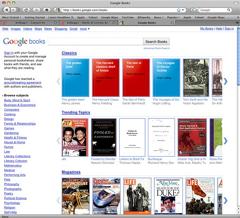
SAN FRANCISCO (AP) -- Google Inc. is making the leap from digital librarian to merchant in a challenge to Amazon.com Inc. and its Kindle electronic reader.

The long-awaited Internet book store, which opened Monday in the U.S., draws upon a portion of the 15 million printed books that Google has scanned into its computers during the past six years.

About 4,000 publishers, including CBS Corp.'s Simon & Schuster Inc., Random House Inc. and Pearson PLC's Penguin Group, are also allowing Google to carry many of their recently released books in the new store.

Those publishing deals will ensure that most of the current best sellers are among the 3 million e-books initially available in Google's store, said Amanda Edmonds, who oversaw the company's partnerships. Millions more out-of-print titles will appear in Google's store, called eBooks, if the company can gain federal court approval of a proposed class-action settlement with U.S. publishers and authors.

The $125 million settlement has been under review for more than two years. It faces stiff opposition from rivals, consumer watchdogs, academic experts, literary agents and even foreign governments, which worry that Google would get too much power to control prices in the still-nascent market for electronic books. Amazon.com, which started its business as a seller of books over the Internet, is among the competitors trying to squelch the settlement. The U.S. Justice Department has advised the judge overseeing the case that the settlement probably would violate antitrust and copyright laws.

Books bought from Google's store can be read on any machine with a Web browser. There are also free applications that can be installed on Apple Inc.'s iPad and iPhone, as well as other devices powered by Google's own mobile operating system, Android.

But Google's eBooks can't be loaded on to the Kindle.

Electronic books are expected to generate nearly $1 billion in U.S. sales this year and climb to $1.7 billion by 2012 as more people buy electronic readers and computer tablets such as the iPad, according to Forrester Research. The research group expects a total of 15 million e-readers and tablets to have been sold in the U.S. by the end of the year.

Google believes it's already offering the broadest selection of digital titles in the world, and it plans to keep adding to the inventory if it can gain the necessary copyright clearances. The company, based in Mountain View, Calif., believes it eventually will be able to make electronic copies of the estimated 130 million books in the world. It's also planning to start selling books outside the U.S. next year.

Google's eBooks store, originally to be called Editions, has been in the works for more than a year. The company already had been showing books no longer protected under copyright in their entirety and displaying snippets of other titles through its widely used search engine.

The company is trying to position its new sales outlet as an ally to publishers, merchants and consumers looking for alternatives to Amazon's electronic book store, which feeds Amazon's hot-selling Kindle, but not other e-readers, including Barnes & Noble Inc.'s Nook.

Google's e-books will work on the Nook, Sony Corp.'s Reader devices and practically every other e-reading device except the Kindle. Google achieves this with the help of Adobe Inc.'s copy-protection system for e-books. That system is already used by public libraries and smaller online bookstores, but hasn't seen much interest from the major players. Amazon.com, Barnes & Noble and Apple all have their own copy-protection systems.

Google plans to offer sharp discounts on many of its e-books but it will still pay publishers 52 percent of the list price for sales made on its site, unless another arrangement has been negotiated with an outside agency. The formula means that even if Google elects to sell a book with a $10 list price for $6, the publisher would still be entitled to $5.20.

Forrester Research analyst James McQuivey described Google's latest effort as a "game expander" rather than a game changer.

The growing embrace of digital sales by the publishing industry is expected to result in the closure of hundreds more book stores during the next few years, adding to a media mortuary of music and video merchants killed by electronic distribution.

Google's announcement comes on the same day that activist investor William Ackman, who owns a 37 percent stake in Borders Group Inc., offered to finance a Borders-led takeover bid for rival bookseller Barnes & Noble Inc. If successful, it could ultimately lead to closures of overlapping stores.

In a move that could delay closures of other retailers, Google is allowing independent book stores to sell its inventory through their own sites. More than 100 book retailers in 36 states already have agreed to team up with Google. They include Powell's in the Portland, Ore., area and online-only merchant Alibris.com.

Opening the door to book merchants who can't afford to invest heavily in technology could help some of them survive the digital transition, McQuivey said. "At least this gives them a fighting chance."

Although Google expects the lion's share of its eBooks revenue to be funneled to its partners, its portion of the sales could help the company develop another way to make money besides the Internet ads that bring most of its income. The availability of eBooks also could help boost advertising sales by giving people another reason to come to Google's website.

Google shares edged up $4.72 to $577.72 in Monday's early afternoon trading.

To allay concerns that it will exploit the dominance of its Internet search engine to spur e-book sales on its own site, Google plans to include links to several other places where people can buy a book mentioned in a search request. And when visitors come to the book section on Google's website, they will be asked if they are interested in buying or just doing general research.
read more...

Wednesday, 1 December 2010

Disappearing Jobs: High-Paying Careers With No Future

It may come as no surprise that the job of newspaper reporter is going the way of the buggy whip maker — but the forces of modernity have placed some unexpected occupations on the endangered species list as well. Using statistics from the Bureau of Labor Statistics' Occupational Outlook Handbook 2010-2011, we identified 10 of the most surprising job categories whose numbers are projected to shrink in the coming years, plus a few that will grow so slowly that you might as well be sending your resume to Irish banks.

Judge


Associated Press

Politicians can argue whether the best quality for a judge is empathy or an ability to call balls and strikes, but here's a different perspective: What you really need is patience. By 2018, the BLS predicts that there will be 700 fewer jobs for judges, magistrate judges, and magistrates, than there were in 2008, thanks mainly to budget cuts. And since the average tenure for a judge is 14 years, turnover is glacial. "Years ago, some left to become general counsel in the private sector, where they could triple their salary, but since the economic downturn, they're staying longer on the bench," says Tamara Dillon, who researches the occupation for the BLS.

Fashion Designer

Call it Project Turnaway. By 2018, only 200 more designers will find work in a field that employed 22,700 people as of 2008. That's about 2 percent of the number who applied to become Project Runway contestants in 2009, estimates Carol-Hannah Whitfield, who was a finalist on the show that year. "The world doesn't need another designer," Whitfield says.

Insurance Underwriter

Blame it on the software. New programs allow underwriters to take on three times as much work as in the past, collapsing the need for more hires. As a result, the BLS projects that the number of people employed in the field will decline by 4 percent, or 4,300 jobs, by 2018. "[The underwriter] just punches in data, and it spits out, say, whether a potential homebuyer is approved or not," says Henry Kasper, supervisory economist at the BLS. Growth in the insurance industry isn't exactly exploding either, further undermining the career outlook for underwriters.

Travel Agent

Call it the Attack of the Roaming Gnome: Online sites such as Travelocity, Priceline.com, Expedia, and Orbitz have decimated the ranks of travel agents as consumers increasingly book their own trips. The BLS expects 1,200 fewer travel agents to be employed in 2018 than in 2008. And the number of traditional travel agencies has been sliced in half — from a peak of 44,000 in 1997 to about 20,000 today, according to Douglas Quinby of PhoCusWright, a travel industry research company based in Sherman, Connecticut.

Newspaper Reporter

Read it and weep: According to the BLS, a whopping 4,400 jobs will disappear by 2018 (out of 69,400 total in 2008). That's more than three times the number of newsroom employees at The New York Times. The bad news for print can be summed up in one word: Internet. "Some of the print people are finding jobs online," says Lauren Csorny, an economist at the BLS. "But there aren't enough to make up for the losses." No wonder that newspaper reporters ranked No. 184 out of 200 jobs, one slot above stevedore, in CareerCast.com's annual JobsRated survey.

Broadcast Announcer


Associated Press

The play-by-play for this occupation isn't pretty. Consolidation has eliminated many jobs already, and technology is hijacking off-air tasks, such as editing, once performed by announcers (and future announcers paying their dues). Add the increased use of syndication and the growth of satellite radio and the picture is even bleaker. By 2018, broadcasting is expected to lose 2,400 radio and TV announcer jobs.

Plant Manager


Associated Press

Automation and offshoring will decimate the ranks of production managers by 2018. According to the BLS, employment will drop by 11,900 jobs from a 2008 total of 156,100. With faster machines and better productivity, one plant can do the work of two, squeezing managers out. Increased imports of manufactured goods will do additional damage. With 50 percent of the textile industry moving off-shore, for example, half the plant managers in that sector are at risk of losing their jobs. The outlook is equally bleak for managers in the computer, electronics, and auto parts industries.

Chemist

Nearly half of all chemists are employed in manufacturing firms — plastics, pesticides, and paint, to name a few. And that's a bummer for them, because manufacturing companies are continuing to outsource their R&D and testing to small, specialized firms, cutting job opportunities for in-house chemists. The profession lost 42,000 jobs from 2008 to 2009, according to Chemical and Engineering News, and the BLS projects only a 2 percent rise in the total number of chemists employed by 2018.

Economist

The Federal government is the largest employer of economists in the country. More than half — 53 percent — of all economists in the U.S. work for declining government sectors, so Uncle Sam's not hiring a lot of economists just now. "Econ" is a hot college major, but most of those newly-minted grads won't find work as traditional economists. Instead, they'll end up in niche sectors in business, finance, insurance, and education. Those set on working as conventional economists better have a Plan B, or a Plan Ph.D, because they'll need one. The economists at BLS do tell us that by 2018, an additional 900 economists will be employed — so the outlook is not as dismal for dismal scientists as it is for, say, travel agents. But if current trends continue, the future isn't promising. "You look at the last 10 to15 years and it has been flat," says Henry Kasper of the BLS. "There's little reason to think it's going to get better."

CEO


Associated Press

OK, it's not a profession, but it's worth keeping in mind if you aspire to the corner office: Mergers and streamlining will make the climb to the top harder than K2, as companies combine and jobs are eliminated. The BLS projects that there will be 5,500 fewer CEOs by 2018. To boost your odds, consider Rosetta Stone; CEO candidates should be fluent in at least two languages, says Patricia Tate of the BLS. So if you speak Spanish, Arabic, or Chinese, félicitations.

read more...